Plumber Chesapeake, VA
Plumbing repair for Chesapeake homes: old galvanized and cast iron lines, sewer lines with roots and leaky pipes. Call Now and we get started.
Call Now (844) 626-0032Say what is leaking, backing up or not working.Is your address covered?
Enter a ZIP code or city to see if we serve your area.
Plumbing problems in Chesapeake
Chesapeake stretches from busy Great Bridge streets to farm fields and swamp edge, and almost all of it sits low and flat. The ground stays wet for much of the year, and the water table is never far below the lawn. Homes run from brick ranches of the 1960s and 1970s to many newer subdivisions, and most sit on crawl spaces or slabs.
Calls come for damp crawl space pipes, sewer lines that back up in heavy rain, slow drains from roots and water heaters that quit in a humid garage. In Chesapeake, we trace the leak, clear the line and repair or replace what failed. Tell us what you see and we start there.
Why plumbing fails in Chesapeake homes
Updated November 2026
- Why do crawl space pipes fail in Chesapeake homes?The ground is low and holds water, so crawl spaces stay damp and humid. Moisture rusts hangers and fittings and sweats on supply lines. Owners see a damp floor, a musty smell or weak flow.
- Why do sewer lines back up after heavy rain in Chesapeake?Flat land has little slope to carry water away, and storm rain fills the ground and the lines. Older laterals leak at the joints and take in groundwater. A toilet that gurgles or a tub that fills is the first sign.
- Do tree roots clog Chesapeake sewer lines?Pines, oaks and maples grow well in the wet soil, and their roots seek out the moisture in a lateral. Clay pipe and worn joints let them in. A drain that clogs again soon after clearing points to roots.
- Why do Chesapeake water heaters fail early?Tanks sit in garages, closets and crawl spaces where the air stays humid. The base and fittings rust over the years, and summer heat adds wear. A small drip at the base can turn into a flooded floor.
- What pipe do older Chesapeake homes have?Houses from the 1960s and 1970s often have cast iron drains and copper supply lines that have aged. Some still have galvanized lines that scale over. Slow drains and low flow mean the pipe has narrowed.
How the weather reaches Chesapeake plumbing
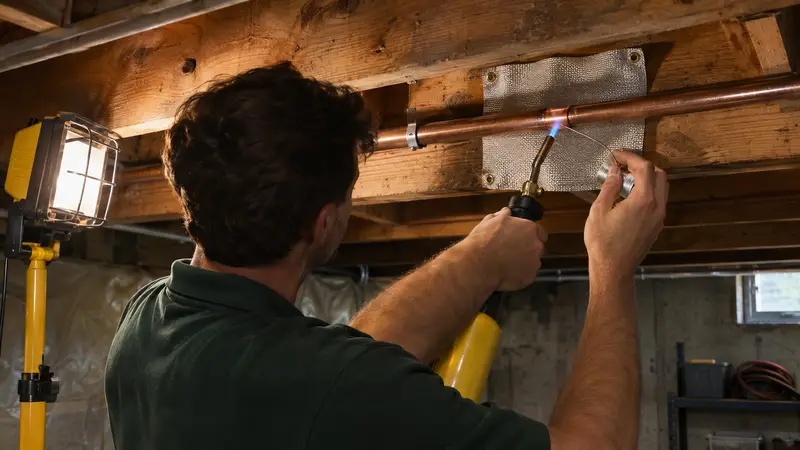
Water sits near the surface after every storm, and crawl spaces stay wet. Supply lines sweat and rust, and the owner sees damp insulation, stains or a soft floor.
The fix: We find the leaking or sweating line, replace the worn section and renew the fittings that failed.
Tree roots follow moisture into worn joints in the sewer lateral. Paper and grease catch on them, and the owner sees slow drains and a gurgling toilet.
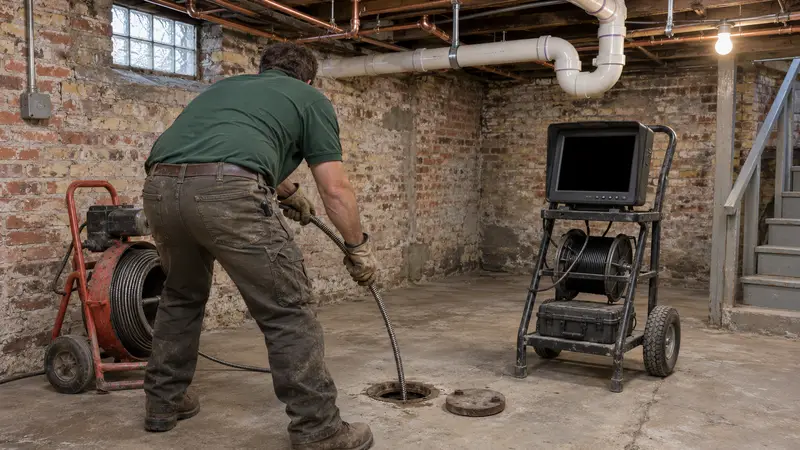
The fix: The line is cleared, a sewer camera check finds the break, and the damaged length is repaired.
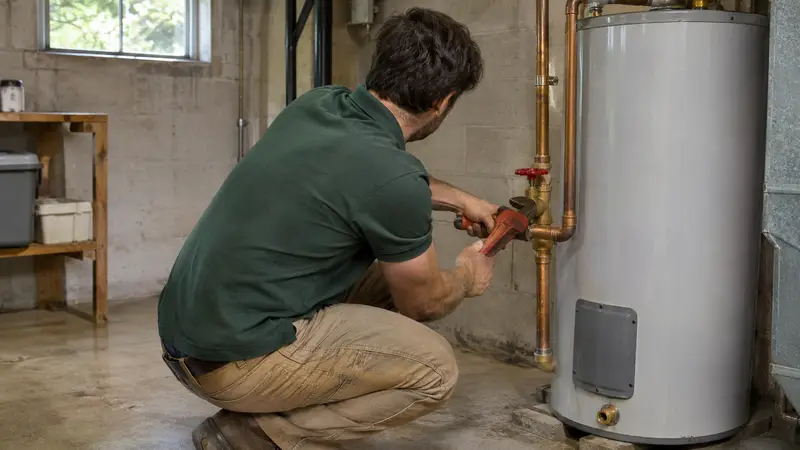
Damp air rots the base of a tank, and long summers keep it working hard. You see rust at the bottom, a wet floor or hot water that fades.
The fix: The old tank is drained and replaced, and the supply and drain lines around it are made tight.
Where leaks show up in Chesapeake homes
Look under the house first. Dripping insulation, rust on hangers and a musty smell mean a supply line or drain is wet. Check the water heater base and the washer hoses for slow drips.
Inside, a damp spot on a wall or a floor that feels soft often traces to a pipe in the crawl space. A water meter that moves with every tap off points to a hidden leak.
Storm season and wet winters
Heavy rain from tropical storms and nor'easters fills the ground fast, and low streets drain slowly. A sewer line already worn at the joints backs up first. Floor drains and low toilets show it before anything else.
Summer brings long humid weeks that keep every crawl space wet. By fall, many owners find rust, sweating pipes or a tank that gave out. We clear the line, dry out the cause and fix the pipe that failed. Roots find the joints in old Chesapeake sewer lines, and the signs of a clogged main sewer line start with slow drains in more than one fixture.
Swamp edge soil and brick ranch pipe
Chesapeake sits beside the Great Dismal Swamp, and its soil is soft and wet. That ground shifts a little with each season and stresses old sewer joints. Roots then find the gaps and grow into the line.
Brick ranches from the 1960s and 1970s are common, and their cast iron drains are tired by now. A section that scales over or cracks is cut out and renewed. That ends the repeat clogs and keeps the floor dry. Homes in nearby Virginia Beach and Norfolk deal with much the same moisture. The wider Hampton Roads area has the same mix of weather and housing.
Neighborhoods we cover in Chesapeake
Greenbrier
Suburban homes from the 1970s and later sit on low ground, where crawl spaces stay damp and laterals take in groundwater.
- 23320
Deep Creek
Older homes near the creek and canal sit on low ground, with aging drains and damp crawl spaces.
- 23323
Plumbing services Chesapeake homes call about
Emergency Plumber
Burst pipes, major leaks, sewage backups and no water, with an answer around the clock.
Emergency Plumber ›Drain Cleaning
Clogged sinks, tubs, toilets and main sewer lines cleared, including roots and sewer camera checks.
Drain Cleaning ›Leak Detection and Repair
Slab leaks, wall leaks and pipe leaks found and fixed before they ruin floors and drywall.
Leak Detection and Repair ›Common problems we get calls about
Banging or noisy pipes
Water hammer, loose pipe straps or high pressure rattle walls.
Running or leaking toilets
A bad flapper, fill valve or wax ring wastes water or leaks onto the floor.
Dripping faucets and fixtures
Worn cartridges and washers waste water around the clock.
Roots in the sewer line
Gurgling, slow drains in several fixtures and repeat main line clogs often mean roots in the lateral.
Rusty water and weak pressure from old pipe
Brown water after a repair, or pressure that dropped at every tap, points to aging galvanized lines.
Low water pressure
A failing regulator, a hidden leak or clogged aerators cut flow.
Get help in three simple steps
- Call and describe the problem
Tell us what is leaking, backing up or not working, and whether water is still running.
- We answer your call
Tell us your address and we confirm that we serve it. We set a time to come to the house.
- Repair and cleanup
We find the cause and fix it. We test the line or fixture before we leave.
Areas we serve in Chesapeake
Chesapeake is part of our Hampton Roads service area. We serve homes in:
- 23320
- 23321
- 23322
- 23323
- 23324
- 23325
Plumbing questions in Chesapeake
Why is my water pressure low?
Mineral buildup in aerators, a failing pressure regulator or a hidden leak are the usual causes. Low pressure at every fixture points to the main line or regulator.
How can I find a hidden leak?
Turn every tap off and watch the water meter. If it still moves, water is escaping somewhere. Warm spots on a slab floor or damp drywall point to where.
What counts as a plumbing emergency?
A burst pipe, water that will not shut off, sewage backing up, no water at all or a gas smell from a water heater. Shut off the main water valve for leaks and call us right away.
Who is a plumber near me in Chesapeake?
We are. We serve Chesapeake homes. Call (844) 626-0032 and describe the problem.
Plumber in Chesapeake, VA: Call Now
Tell us what is leaking, backing up or not working. We take it from there.
Call Now (844) 626-0032