Plumber New Hampshire
Plumbing repair for homes across New Hampshire, from burst pipes and slab leaks to clogged sewer lines.
Call Now (844) 626-0032Say what is leaking, backing up or not working.Is your address covered?
Enter a ZIP code or city to see if we serve your area.
Plumbing in New Hampshire
New Hampshire runs from a short stretch of Atlantic coast to the White Mountains and the North Country. In between sit the Merrimack Valley, the southern mill towns, the Lakes Region and long granite ridges. Winters are cold and snowy in every part of the state, and frost reaches deep into the ground. Soil is thin and stony, and ledge sits close to the surface almost everywhere.
That mix shapes every pipe in the state. Many homes sit on stone or poured foundations with full basements, and a lot of rural homes run on private wells and septic systems. Pine, maple and oak crowd the yards and push roots toward drain lines. We fix burst pipes, trace leaks and clear sewer lines across the state.
Where plumbing fails in New Hampshire homes
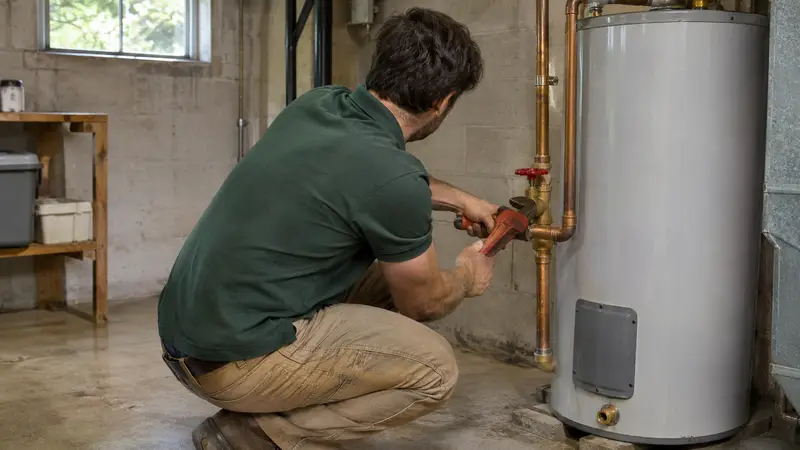
Basements take the brunt. Water heaters sit on damp floors and rust from the bottom, and old supply lines run through cold corners near the foundation wall. Well pumps, pressure tanks and the lines that feed them fail more often when they sit in unheated sheds and crawl spaces.
Drains fail in a few steady ways. Roots work into old clay and cast iron lines in the mill towns and along the coast. Granite ledge makes buried pipe hard to repair, so a small crack can turn into a long, slow backup before anyone finds it.
Winter freezes, thaws and the calls that follow
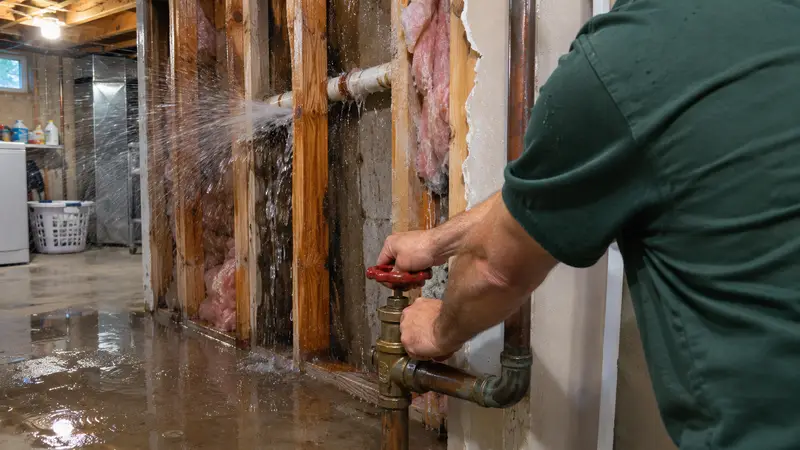
Hard freezes arrive early and stay late. Pipes in outside walls, garages, camps and closed porches split when the cold settles in, and many second homes sit empty with the heat turned low. A cracked line in a closed camp can run for days after a warm spell.
Spring brings the thaw and heavy runoff. Sump pumps work hard, low basements take on water, and old drains back up when the ground is soaked. Ice dams on roofs also push melt water into walls where old pipes run.
How the age and style of New Hampshire homes change the problem
Mill-town homes in the Merrimack Valley and the southern tier are often old triple-deckers, farmhouses and capes with pipes hidden in plaster and under thick floors. Galvanized steel supply lines close up with scale, and cast iron drains rust through from the inside. Repairs need patience to avoid more damage.
Newer homes in the southern suburbs sit on poured foundations and use plastic and copper. They still depend on well-kept drains, pumps and water heaters. Lake cottages and camps often have plumbing that was added in pieces over many decades.
Common problems we get calls about
Frozen or split pipes
Pipes in exterior walls, garages and crawl spaces freeze first, and the leak starts at the thaw.
Rusty water and weak pressure from old pipe
Brown water after a repair, or pressure that dropped at every tap, points to aging galvanized lines.
Roots in the sewer line
Gurgling, slow drains in several fixtures and repeat main line clogs often mean roots in the lateral.
Burst or leaking pipes
Water on the floor or a wet ceiling. Shutting off the main valve limits damage until we arrive.
Basement floor drain backups
Heavy rain or a clogged main sends water up through the lowest drain in the house.
Banging or noisy pipes
Water hammer, loose pipe straps or high pressure rattle walls.
Get help in three simple steps
- Call and describe the problem
Tell us what is leaking, backing up or not working, and whether water is still running.
- We answer your call
Tell us your address and we confirm that we serve it. We set a time to come to the house.
- Repair and cleanup
We find the cause and fix it. We test the line or fixture before we leave.
New Hampshire coverage map
We serve 35 New Hampshire cities.
New Hampshire questions
Which parts of New Hampshire have the most burst pipes?
Burst pipes show up most in the North Country, the mountain towns and the Lakes Region, where cold lasts the longest. Homes with pipes in outside walls, garages or empty camps are the most at risk.
Why do old New Hampshire homes have so many sewer problems?
Many older drains are clay or early cast iron that cracks with age and frost. Tree roots grow into the joints, and ledge under the soil makes the damage slow and hard to repair.
How do I shut off the water in an emergency?
Turn the main shutoff valve clockwise until it stops. It is usually where the water line enters the house, near the meter, in a basement or in a utility closet.
What counts as a plumbing emergency?
A burst pipe, water that will not shut off, sewage backing up, no water at all or a gas smell from a water heater. Shut off the main water valve for leaks and call us right away.
How do I find a plumber near me in New Hampshire?
Call (844) 626-0032 and tell us your address. We confirm that we serve it and get started.
Plumber in New Hampshire: Call Now
Describe the problem. We take it from there in New Hampshire.
Call Now (844) 626-0032