Plumber Georgia
Plumbing repair for homes across Georgia, from burst pipes and slab leaks to clogged sewer lines.
Call Now (844) 626-0032Say what is leaking, backing up or not working.Is your address covered?
Enter a ZIP code or city to see if we serve your area.
Plumbing in Georgia
Georgia sits between the Appalachian foothills and the coastal plain, and its plumbing changes with the land. North Georgia and the Piedmont have rolling hills, red clay and thick stands of pine and oak. Homes there often have a basement or a tall crawl space. South of the fall line the ground turns sandy and flat, and slab homes become more common. Summers are hot and wet, and winters are mild with sudden cold snaps.
Clay soil swells when it is wet and shrinks when it is dry, and that slow movement strains buried pipes. Tree roots find any weak joint in a sewer line and fill it with a mat of fine roots. We fix burst pipes, trace slab leaks and clear sewer lines across the state. Water in the Atlanta area is soft, so scale is less of a worry than rust, old fittings and shifting ground.
Georgia metro areas we cover
Atlanta Area
Red clay, mature trees and crawl space pipes drive Atlanta area plumbing trouble.
We serve 117 areas ›Northeast Georgia
Red clay and old trees put steady pressure on drain and sewer lines.
We serve 11 areas ›Rome, GA
We serve 2 areas
Rome plumbing repair ›Pooler, GA
We serve 1 area
Pooler plumbing repair ›Where plumbing fails in Georgia homes
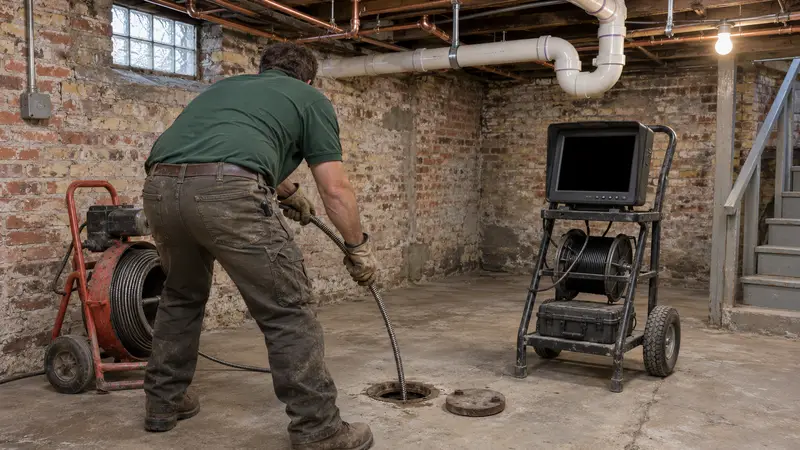
Sewer lines take the most abuse. Roots grow into clay pipes and old cast iron, and the line slows, gurgles and backs up into the lowest drain in the house. Settling soil can also leave a belly in the pipe where waste collects.
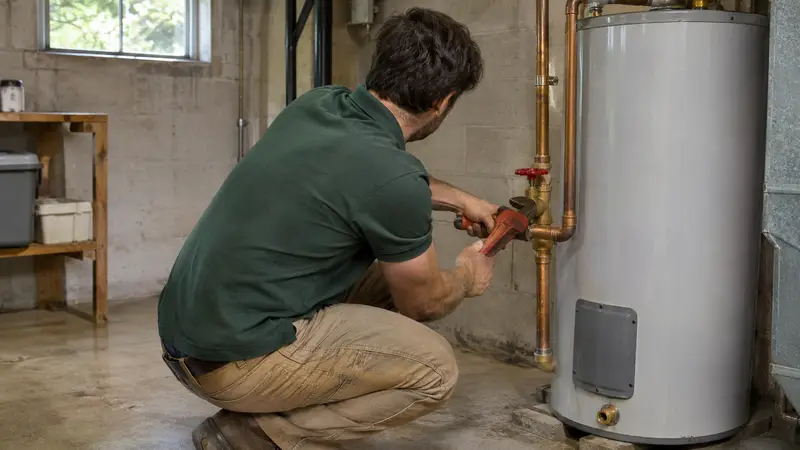
Supply lines fail in quieter ways. Crawl space pipes sweat, rust and drip where nobody looks. Water heaters in basements and garages run for many years and then leak at the base. Washing machine hoses and toilet connectors burst without warning and flood a floor in an afternoon.
Cold snaps, thunderstorms and the calls that follow
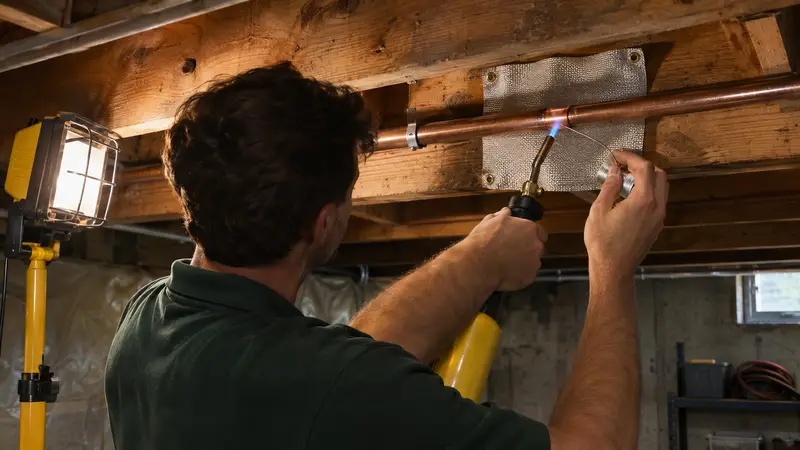
Georgia winters are short, but they catch homes off guard. Pipes in crawl spaces, garages and outside walls are rarely wrapped for hard cold. One night of deep freeze can split a line, and the leak shows up when the weather warms and the water runs again.
Spring and summer storms bring heavy rain and high winds. Water pours into basements and window wells, and sump pumps struggle. Falling limbs and uprooted trees break water lines and sewer pipes in yards. After a big storm, drains in low areas often back up.
How the age and style of Georgia homes change the problem
Many neighborhoods in the Atlanta suburbs grew fast from the 1970s through the 2000s. Homes from the early years have galvanized supply lines and cast iron drains that are near the end of their life. Later homes use plastic pipe, but builders sometimes hid lines in tight walls where leaks are hard to reach.
Older towns in the north and west have brick and frame houses from the early and middle twentieth century. Clay sewer lines, tangled additions and mixed pipe types are common. Lake homes and mountain cabins have long runs from the street or a well, which makes pressure and freezing harder to manage.
Common problems we get calls about
No hot water
A leaking tank, a pilot that will not stay lit or a failed element.
Rusty water and weak pressure from old pipe
Brown water after a repair, or pressure that dropped at every tap, points to aging galvanized lines.
Roots in the sewer line
Gurgling, slow drains in several fixtures and repeat main line clogs often mean roots in the lateral.
Basement floor drain backups
Heavy rain or a clogged main sends water up through the lowest drain in the house.
Frozen or split pipes
Pipes in exterior walls, garages and crawl spaces freeze first, and the leak starts at the thaw.
Sewage backing up
Wastewater at a floor drain or tub points to a main line clog.
Get help in three simple steps
- Call and describe the problem
Tell us what is leaking, backing up or not working, and whether water is still running.
- We answer your call
Tell us your address and we confirm that we serve it. We set a time to come to the house.
- Repair and cleanup
We find the cause and fix it. We test the line or fixture before we leave.
Georgia coverage map
We serve 435 Georgia cities.
Georgia questions
Which parts of Georgia have the most sewer line problems?
Older Atlanta suburbs and the tree-heavy towns of the Piedmont have the most. Clay soil, mature oaks and aging clay or cast iron pipe combine to cause slow drains and backups.
Do pipes freeze in Georgia?
They do, a few nights each winter, mostly in north Georgia and in crawl spaces and garages. Pipes in outside walls are the first to split when a hard cold snap hits.
How do I shut off the water in an emergency?
Turn the main shutoff valve clockwise until it stops. It is usually where the water line enters the house, near the meter, in a basement or in a utility closet.
Why do my drains keep clogging?
Grease, hair, wipes and tree roots are the common causes. If several drains back up at once, the clog is usually in the main sewer line.
How do I find a plumber near me in Georgia?
Call (844) 626-0032 and tell us your address. We confirm that we serve it and get started.
Plumber in Georgia: Call Now
Describe the problem. We take it from there in Georgia.
Call Now (844) 626-0032Top metro areas
Georgia cities
- Acworth, GA
- Alpharetta, GA
- Athens, GA
- Atlanta, GA
- Buford, GA
- Canton, GA
- Cartersville, GA
- Clarkston, GA
- Conyers, GA
- Covington, GA
- Dallas, GA
- Decatur, GA
- Douglasville, GA
- Duluth, GA
- Fairburn, GA
- Fayetteville, GA
- Flowery Branch, GA
- Gainesville, GA
- Griffin, GA
- Kennesaw, GA
- Lawrenceville, GA
- Lilburn, GA
- Locust Grove, GA
- Loganville, GA
- Mableton, GA
- Marietta, GA
- Mcdonough, GA
- Monroe, GA
- Newnan, GA
- Norcross, GA
- Peachtree City, GA
- Peachtree Corners, GA
- Pooler, GA
- Powder Springs, GA
- Red Oak, GA
- Riverdale, GA
- Rome, GA
- Roswell, GA
- Smyrna, GA
- Stockbridge, GA
- Suwanee, GA
- Tucker, GA
- Union City, GA
- Winder, GA
- Woodstock, GA