Plumber Plainfield, NJ
Plumbing repair for Plainfield homes: burst pipes, old galvanized and cast iron lines and sewer lines with roots. Call Now and we get started.
Call Now (844) 626-0032Say what is leaking, backing up or not working.Is your address covered?
Enter a ZIP code or city to see if we serve your area.
Plumbing problems in Plainfield
Plainfield is known for big Victorian and early 1900s homes on wide, shaded streets, with several historic districts. Those houses were built with steam or hot water heat, deep basements and plumbing laid out long before modern codes. Brooks and low ground run through the city, so water is always close by.
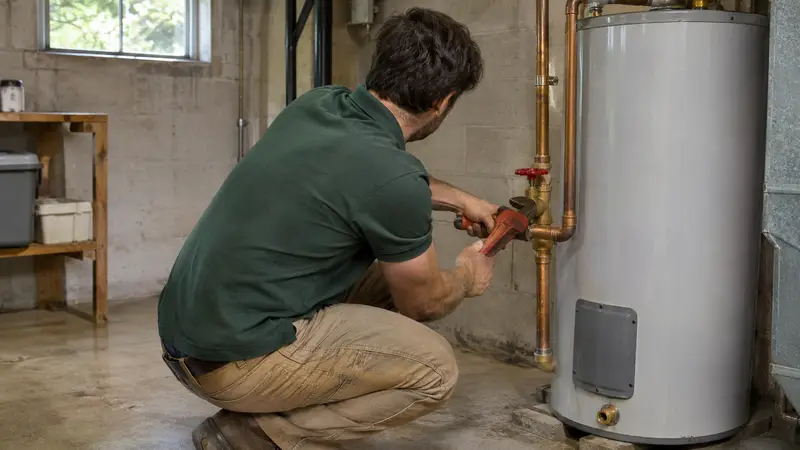
Calls come from burst pipes in cold bedrooms, sewer lines choked by roots, wet basements and boilers or water heaters that quit in winter. Across Plainfield, we repair old supply lines, clear stubborn drains and replace failed tanks. Tell us what you hear or see and we get started.
Why plumbing fails in Plainfield homes
Updated November 2026
- Why do old Plainfield homes have so many pipe leaks?Many were built in the late 1800s and early 1900s and have been updated in pieces. Old galvanized steel meets newer copper at mixed joints, and those joints corrode. Leaks show up in walls and under floors.
- Why do sewer lines back up in Plainfield?Big old shade trees line the streets and yards. Roots grow into clay sewer laterals that are a century old. The pipe fills with roots, and wastewater backs up into the basement.
- Why do basements get wet in Plainfield?Brooks and low ground raise the water table in wet weather. Stone and block foundations let water seep in, and old floor drains back up. Sump pumps get heavy use.
- Why do pipes freeze in Plainfield's large old houses?Big houses have long runs of pipe in cold corners, porches and third-floor bathrooms. A cold snap splits the line, and the water runs through several floors when it thaws.
- Why do boilers and water heaters fail in winter in Plainfield?Old heating boilers and tanks run hardest in the coldest weeks. Rust and scale weaken them, and a failing part gives out during a cold spell.
How freezing nights reach Plainfield plumbing
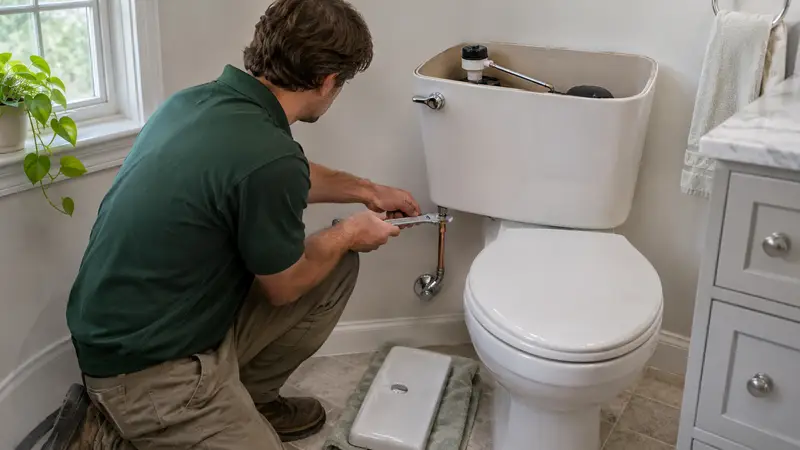
Galvanized, copper, cast iron and plastic often meet in one house. The joints between them corrode, and the owner sees a stain on plaster, low pressure or rusty water.
The fix: The leak is traced, the worn section is cut out, and new pipe is joined so the metals no longer eat at each other.
Roots enter the joints of old clay sewer pipe and spread inside. Drains slow, toilets gurgle and the basement floor drain backs up.
The fix: The line is cleared, a sewer camera check finds the cracks, and the broken section is replaced.
Long supply runs pass through cold porches, back kitchens and upper baths. A freeze splits a pipe, and water runs down through the floors when it thaws.
The fix: The split is repaired, the water is shut off at the right valve, and exposed pipe is wrapped or moved to a warmer wall.
Where leaks and backups show up in Plainfield homes
Basements and first-floor baths take most of it. Old cast iron stacks leak at the joints inside walls, and a stain on a plaster ceiling is often the first sign. Kitchens in converted two-family houses often share one drain line, so a blockage there can back up in more than one unit.
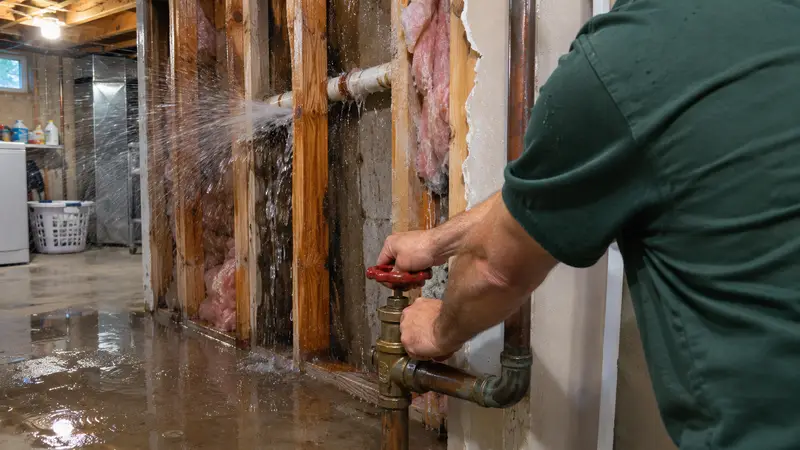
Third-floor and attic baths are another weak spot. Long supply runs through cold walls lose heat, and a small pinhole leak inside lath and plaster can run for weeks before the wall bulges. When a hard freeze hits Plainfield, the first split pipe is usually in a garage, crawl space or exterior wall, and the first minutes after a pipe bursts decide how much water gets in.
Winter cold, spring thaw and summer storms
The first hard freeze brings split pipes in porches, back kitchens and upper bathrooms. Heating boilers also work hardest then, and a failed one leaves a house cold. In Plainfield, we see calls pile up the morning after a cold night.
Spring thaw and summer storms push water into low basements. Brooks rise, the ground fills and sewers run full. Sump pumps and floor drains are tested hard in those weeks. Mature trees in Plainfield send roots into clay and cast iron lines, so a main sewer line clog tends to return.
Historic homes and old street trees
Plainfield grew as a rail suburb in the late 1800s, and many large homes were built then for families who wanted space. The plumbing has been patched over generations, so a single house may hold clay, cast iron, galvanized steel, copper and plastic.
Maples and oaks along the old streets are now huge. Their roots go after the moisture in aging sewer joints. When we find a root mass with a sewer camera check, the line is cleared and the break repaired, so the same blockage does not return. Homes in nearby South Plainfield and Westfield deal with much the same moisture. The wider Union County area has the same mix of weather and housing.
Neighborhoods we cover in Plainfield
Van Wyck Brooks
Large Victorian and early 1900s homes with deep basements, old galvanized lines and clay sewer laterals.
- 07060
Plumbing services Plainfield homes call about
Emergency Plumber
Burst pipes, major leaks, sewage backups and no water, with an answer around the clock.
Emergency Plumber ›Drain Cleaning
Clogged sinks, tubs, toilets and main sewer lines cleared, including roots and sewer camera checks.
Drain Cleaning ›Leak Detection and Repair
Slab leaks, wall leaks and pipe leaks found and fixed before they ruin floors and drywall.
Leak Detection and Repair ›Common problems we get calls about
Frozen or split pipes
Pipes in exterior walls, garages and crawl spaces freeze first, and the leak starts at the thaw.
No hot water
A leaking tank, a pilot that will not stay lit or a failed element.
Basement floor drain backups
Heavy rain or a clogged main sends water up through the lowest drain in the house.
Rusty water and weak pressure from old pipe
Brown water after a repair, or pressure that dropped at every tap, points to aging galvanized lines.
Roots in the sewer line
Gurgling, slow drains in several fixtures and repeat main line clogs often mean roots in the lateral.
Low water pressure
A failing regulator, a hidden leak or clogged aerators cut flow.
Get help in three simple steps
- Call and describe the problem
Tell us what is leaking, backing up or not working, and whether water is still running.
- We answer your call
Tell us your address and we confirm that we serve it. We set a time to come to the house.
- Repair and cleanup
We find the cause and fix it. We test the line or fixture before we leave.
Areas we serve in Plainfield
Plainfield is part of our Union County service area. We serve homes in:
- 07060
- 07062
- 07063
Plumbing questions in Plainfield
How do I shut off the water in an emergency?
Turn the main shutoff valve clockwise until it stops. It is usually where the water line enters the house, near the meter, in a basement or in a utility closet.
Why is my water pressure low?
Mineral buildup in aerators, a failing pressure regulator or a hidden leak are the usual causes. Low pressure at every fixture points to the main line or regulator.
Why do my drains keep clogging?
Grease, hair, wipes and tree roots are the common causes. If several drains back up at once, the clog is usually in the main sewer line.
Who is a plumber near me in Plainfield?
We are. We serve Plainfield homes. Call (844) 626-0032 and describe the problem.
Plumber in Plainfield, NJ: Call Now
Tell us what is leaking, backing up or not working. We take it from there.
Call Now (844) 626-0032