Plumber Louisville, CO
Plumbing repair for Louisville homes: burst pipes, old galvanized and cast iron lines and water heaters scaled by hard water. Call Now and we get started.
Call Now (844) 626-0032Say what is leaking, backing up or not working.Is your address covered?
Enter a ZIP code or city to see if we serve your area.
Plumbing problems in Louisville
Louisville began as a coal mining town at the edge of the plains, and the old part of town still has small cottages from the early 1900s on narrow lots. Around it sit neighborhoods from the 1980s and 1990s, most with basements. Cold winters, dry summers and clay ground make for steady wear on water lines and drains.
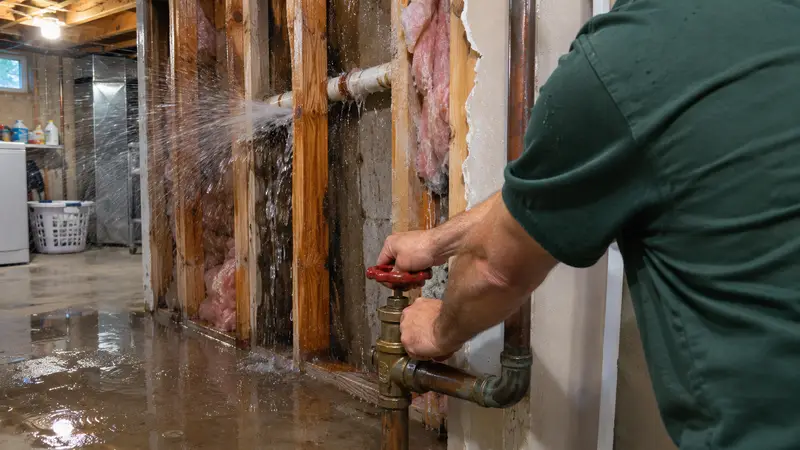
A Louisville call usually means a split pipe after a freeze, a water heater leaking in the basement or a sewer line that has backed up. In Louisville, we locate the problem, repair what failed and get your water and drains back to normal.
Why plumbing fails in Louisville homes
Updated November 2026
- Why do older Louisville homes have plumbing trouble?Cottages near the old center were built long before modern pipe. Many have been added onto, so the plumbing is a mix of old galvanized steel, cast iron and newer copper. The joins between them are where leaks start.
- Why do pipes freeze in Louisville?Cold air pools along the Front Range on clear winter nights. Lines in garages, crawl spaces under additions and outside walls can freeze and split. The leak shows after the thaw.
- Why do Louisville basements have water heater leaks?Most newer homes keep the heater in the basement or a utility closet. Hard water leaves scale in the tank, and the bottom rusts through. The water spreads across the slab and into finished space.
- Why do sewer lines back up in Louisville?Older lines are clay or cast iron with rough joints. Roots from mature trees get in, and the clay soil shifts the pipe. Drains slow down and then back up into the lowest floor drain.
- Why does clay soil matter for Louisville water lines?Clay swells when wet and shrinks when dry. That slow movement pulls on the line where it enters the house. Owners notice low pressure or a wet spot near the foundation.
How freezing nights reach Louisville plumbing
Additions and repairs over a century left galvanized, cast iron and copper joined together. Rust narrows the old pipe and the joins weep, so owners see weak flow and drips.
The fix: We trace the worn section, replace it with new pipe and tie it cleanly into what still works.
Clear cold nights freeze pipes in garages, outside walls and under additions. Ice splits the pipe, and the water comes out when it thaws.
The fix: The line is shut off, the split is cut out and replaced and the run is wrapped or rerouted.
Hard water builds scale in the tank. The heater loses heat, makes popping noises and finally leaks across the basement floor.
The fix: The old tank is drained and replaced, the connections are renewed and a drain pan and shutoff are set up.
Where problems show up in Louisville homes
Basements and utility rooms have the most trouble. A damp floor by the heater, a rusty drip from a valve or a stain under an upstairs bath is the first sign. Older cottages show it in crawl spaces and under kitchens.
Garage and exterior walls are next. Laundry lines and hose bibs sit against cold surfaces, and they split without warning in a hard freeze. When a hard freeze hits Louisville, the first split pipe is usually in a garage, crawl space or exterior wall, and the first minutes after a pipe bursts decide how much water gets in.
Winter cold and spring thaws
Louisville winters bring sharp cold, sometimes right after a mild week. That swing stresses joints and fittings, and the first freeze of the season is the busiest. Calls arrive the morning after, when the ice lets go.
Spring thaws and sudden storms soak the clay and load the sewer. Basement drains take the water first. A line that was only slow in winter often backs up outright by April. Scale builds on the bottom of a Louisville water heater tank year after year, which shortens water heater life.
A mining town's old lots and newer subdivisions
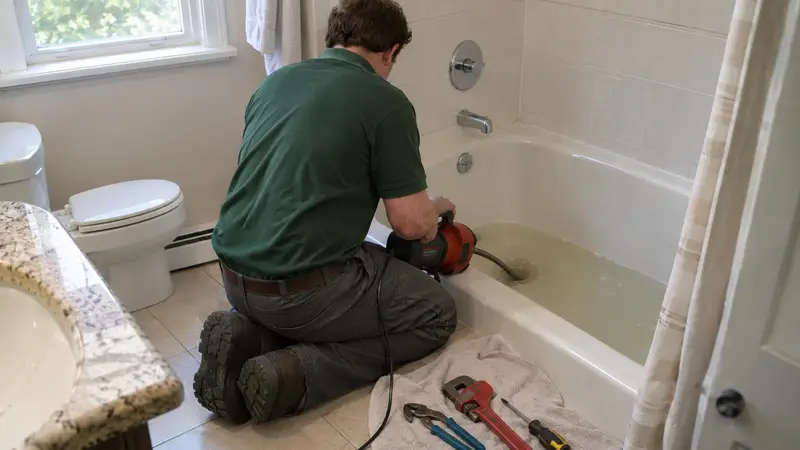
The old part of Louisville has small lots with tall trees and early drain lines. Roots follow the moisture straight to the joints, and a slow tub or a gurgling toilet is often the sign. A sewer camera check shows what the pipe looks like inside.
Newer subdivisions have PEX and copper but the same clay ground. Settling pulls on fittings near the foundation, and we find slow drips at valves and heater hookups long before any water shows on the floor. Homes in nearby Lafayette and Broomfield deal with much the same moisture. The wider Denver Area area has the same mix of weather and housing.
Neighborhoods we cover in Louisville
Coal Creek Ranch
Homes from the 1980s and 1990s with basements, where original water heaters and drain lines are aging.
- 80027
Steel Ranch
Newer homes close together, where a small leak in a wall or utility room can go unseen for a while.
- 80027
Downtown Louisville
Early 1900s cottages with mixed galvanized and cast iron pipe, and drains that have served for many decades.
- 80027
Plumbing services Louisville homes call about
Emergency Plumber
Burst pipes, major leaks, sewage backups and no water, with an answer around the clock.
Emergency Plumber ›Leak Detection and Repair
Slab leaks, wall leaks and pipe leaks found and fixed before they ruin floors and drywall.
Leak Detection and Repair ›Water Heater Repair and Replacement
Tank and tankless water heaters that leak, run cold or stopped working.
Water Heater Repair and Replacement ›Common problems we get calls about
Basement floor drain backups
Heavy rain or a clogged main sends water up through the lowest drain in the house.
Scale on faucets and a noisy water heater
White crust on fixtures and a popping tank are signs of mineral buildup.
Frozen or split pipes
Pipes in exterior walls, garages and crawl spaces freeze first, and the leak starts at the thaw.
No hot water
A leaking tank, a pilot that will not stay lit or a failed element.
Rusty water and weak pressure from old pipe
Brown water after a repair, or pressure that dropped at every tap, points to aging galvanized lines.
Burst or leaking pipes
Water on the floor or a wet ceiling. Shutting off the main valve limits damage until we arrive.
Get help in three simple steps
- Call and describe the problem
Tell us what is leaking, backing up or not working, and whether water is still running.
- We answer your call
Tell us your address and we confirm that we serve it. We set a time to come to the house.
- Repair and cleanup
We find the cause and fix it. We test the line or fixture before we leave.
Areas we serve in Louisville
Louisville is part of our Denver Area service area. We serve homes in:
- 80027
Plumbing questions in Louisville
How do I shut off the water in an emergency?
Turn the main shutoff valve clockwise until it stops. It is usually where the water line enters the house, near the meter, in a basement or in a utility closet.
What counts as a plumbing emergency?
A burst pipe, water that will not shut off, sewage backing up, no water at all or a gas smell from a water heater. Shut off the main water valve for leaks and call us right away.
Why do my drains keep clogging?
Grease, hair, wipes and tree roots are the common causes. If several drains back up at once, the clog is usually in the main sewer line.
Who is a plumber near me in Louisville?
We are. We serve Louisville homes. Call (844) 626-0032 and describe the problem.
Plumber in Louisville, CO: Call Now
Tell us what is leaking, backing up or not working. We take it from there.
Call Now (844) 626-0032