Plumber Lexington, KY
Plumbing repair for Lexington homes: burst pipes, old galvanized and cast iron lines and sewer lines with roots. Call Now and we get started.
Call Now (844) 626-0032Say what is leaking, backing up or not working.Is your address covered?
Enter a ZIP code or city to see if we serve your area.
Plumbing problems in Lexington
Lexington is built on limestone, the same rock that grows the Bluegrass and gives the water its minerals. The ground is a mix of clay and rock, and horse farms give way to old brick streets near downtown and large subdivisions further out. Hard water, mature shade trees and winter cold shape most of the plumbing calls here.
A typical Lexington call is a heater coated in scale, a split pipe after a freeze or a sewer line full of roots. In Lexington, we trace the leak, clear the drain and repair or replace the worn part.
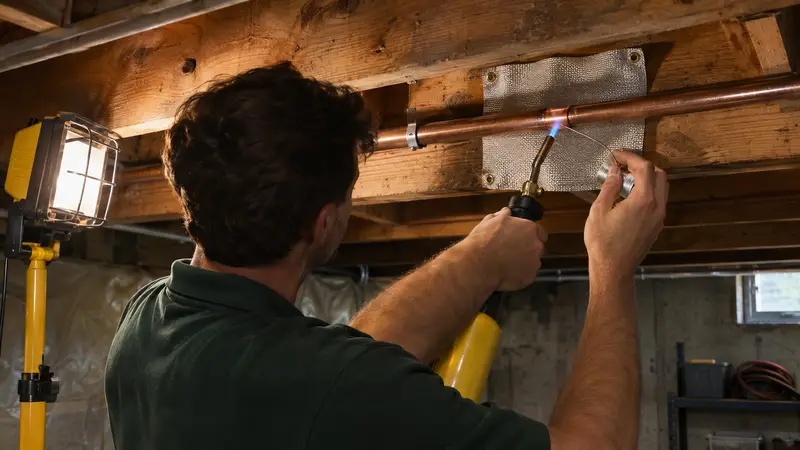
Why plumbing fails in Lexington homes
Updated November 2026
- Why does hard water cause trouble in Lexington homes?Water in this limestone region carries minerals that settle as scale. It builds up in water heaters, on faucet screens and inside shower valves. Heaters lose hot water and fixtures clog long before they would otherwise wear out.
- Why do Lexington sewer lines clog with roots?Older neighborhoods have tall oaks, maples and sycamores. Their roots push into clay and cast iron sewer joints in search of water. The line slows, then a toilet or tub backs up.
- Why do pipes freeze in Lexington?Bluegrass winters bring hard freezes after warm spells. Lines in garages, outside walls and crawl spaces split when the ice forms. The leak appears when the pipe thaws.
- Why do older Lexington homes need pipe repairs?Houses from the early and mid 1900s may still have galvanized supply lines and cast iron drains. Both rust from the inside. Pressure drops, water runs brown and pinhole leaks open in the walls.
- Why do some Lexington basements flood from drains?Basements are common in the older parts of town. When heavy rain fills old sewers, water pushes up through floor drains. A sump pump that fails adds to the problem.
How freezing nights reach Lexington plumbing
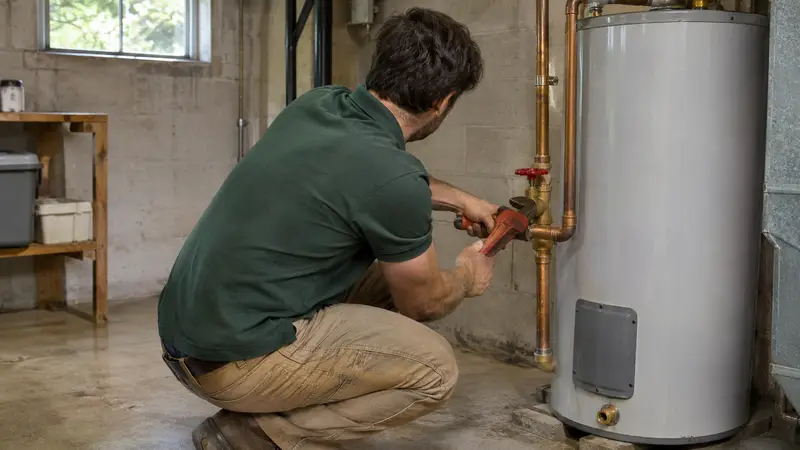
Minerals bake onto heater tanks, valves and fixtures. Hot water runs short, faucets sputter and the tank may start to leak at the base.
The fix: The heater is flushed or replaced, and clogged valves and screens are cleaned or swapped.
Roots enter old clay and cast iron joints and fill the pipe. Drains gurgle, the yard goes soggy and a backup shows in the lowest fixture.
The fix: The line is cleared, a sewer camera check finds the break and the bad section is repaired.
Garage lines, outside walls and crawl spaces freeze on cold nights. The pipe splits, and the owner finds water once it warms up.
The fix: The split run is replaced, and the line is wrapped or moved away from the cold side.
Where leaks and clogs show up in Lexington homes
Water heaters and fixtures show hard water first. A tank that rumbles, a showerhead that sprays sideways or a faucet that runs slow all point to scale. In older houses, the next sign is rust in the hot water or a stain on a ceiling below a bathroom.
Drains are the other big source of calls. A slow tub, a gurgling toilet or a wet spot in the yard points to a lateral line with roots or a break. Houses with basements often show it at the floor drain. When a hard freeze hits Lexington, the first split pipe is usually in a garage, crawl space or exterior wall, and the first minutes after a pipe bursts decide how much water gets in.
Cold snaps, wet springs and hot summers
Lexington winters swing between mild days and hard freezes. Pipes in garages, outside walls and crawl spaces split on the cold nights, and the water appears after the thaw. Calls spike the morning after the first deep freeze.
Spring storms load the sewers, and basements catch the overflow. Summer heat and humidity wear on water heaters and sweating pipes. Fall is a good time to flush a tank and check valves before the cold arrives. Mature trees in Lexington send roots into clay and cast iron lines, so a main sewer line clog tends to return.
Old brick streets and newer subdivisions
Near downtown, many houses date to the early and mid 1900s. Their galvanized supply lines and cast iron drains are near the end of their life. A repair in one spot often reveals more worn pipe nearby.
Newer subdivisions use plastic and PEX, which avoids rust but not scale or freezing. Clay soil that shifts between wet and dry can strain buried lines. Where yard trees are young, roots become a problem a decade or two later. Homes in nearby Nicholasville and Georgetown deal with much the same moisture.
Neighborhoods we cover in Lexington
Chevy Chase
Brick homes from the early and mid 1900s under big shade trees, where old drains meet roots.
- 40502
Ashland Park
Early 1900s houses on tree-lined streets, many with original galvanized lines and cast iron drains.
- 40502
Gratz Park
A historic downtown district of very old brick houses with plumbing that has been patched for generations.
- 40507
Woodland Park
Older houses near downtown, where aging supply lines and drains sit under mature trees.
- 40508
Plumbing services Lexington homes call about
Emergency Plumber
Burst pipes, major leaks, sewage backups and no water, with an answer around the clock.
Emergency Plumber ›Leak Detection and Repair
Slab leaks, wall leaks and pipe leaks found and fixed before they ruin floors and drywall.
Leak Detection and Repair ›Drain Cleaning
Clogged sinks, tubs, toilets and main sewer lines cleared, including roots and sewer camera checks.
Drain Cleaning ›Common problems we get calls about
Clogged or slow drains
A sink, tub or toilet that drains slowly, gurgles or backs up.
Frozen or split pipes
Pipes in exterior walls, garages and crawl spaces freeze first, and the leak starts at the thaw.
Scale on faucets and a noisy water heater
White crust on fixtures and a popping tank are signs of mineral buildup.
Rusty water and weak pressure from old pipe
Brown water after a repair, or pressure that dropped at every tap, points to aging galvanized lines.
Dripping faucets and fixtures
Worn cartridges and washers waste water around the clock.
Roots in the sewer line
Gurgling, slow drains in several fixtures and repeat main line clogs often mean roots in the lateral.
Get help in three simple steps
- Call and describe the problem
Tell us what is leaking, backing up or not working, and whether water is still running.
- We answer your call
Tell us your address and we confirm that we serve it. We set a time to come to the house.
- Repair and cleanup
We find the cause and fix it. We test the line or fixture before we leave.
Areas we serve in Lexington
Lexington is the center of our Lexington service area. We serve homes in:
- 40502
- 40503
- 40504
- 40505
- 40507
- 40508
- 40509
- 40510
- 40511
- 40513
- 40514
- 40515
- 40516
- 40517
- 40526
- 40536
Plumbing questions in Lexington
Why is my water pressure low?
Mineral buildup in aerators, a failing pressure regulator or a hidden leak are the usual causes. Low pressure at every fixture points to the main line or regulator.
How can I find a hidden leak?
Turn every tap off and watch the water meter. If it still moves, water is escaping somewhere. Warm spots on a slab floor or damp drywall point to where.
Why is my water heater leaking?
A leak from the tank means the tank failed and needs replacement. A leak at a pipe connection or the relief valve can often be repaired.
Who is a plumber near me in Lexington?
We are. We serve Lexington homes. Call (844) 626-0032 and describe the problem.
Plumber in Lexington, KY: Call Now
Tell us what is leaking, backing up or not working. We take it from there.
Call Now (844) 626-0032