Plumber Greenville, SC
Plumbing repair for Greenville homes: burst pipes, old galvanized and cast iron lines and sewer lines with roots. Call Now and we get started.
Call Now (844) 626-0032Say what is leaking, backing up or not working.Is your address covered?
Enter a ZIP code or city to see if we serve your area.
Plumbing problems in Greenville
Greenville spreads across the foothills of the Blue Ridge, where the red clay slopes and tall hardwoods give the city its look. Many streets were built in the 1920s through the 1950s, and the houses on them are now old enough to have worn lines and drains. Cold snaps in winter and long humid summers keep that old plumbing busy.
The usual Greenville pattern is a split pipe after a freeze, a rusty supply line that has lost its pressure or a sewer lateral grown full of roots. In Greenville, we trace leaks, clear drains and replace failing water heaters and old lines. Tell us what is wrong and we get started.
Why plumbing fails in Greenville homes
Updated November 2026
- Why do older Greenville homes have so many pipe problems?Bungalows and brick ranches from the 1920s to the 1950s often still have galvanized supply lines and cast iron or clay drains. Rust narrows the supply pipes, and the drains crack or scale inside. Leaks, low pressure and repeat clogs are the result.
- Why do sewer laterals fail in Greenville?Big oaks, maples and poplars grow over old clay sewer lines. Roots slip through the joints in search of water. The line then clogs, and heavy rain makes the backup worse.
- Why do pipes freeze in Greenville?Winter nights fall below freezing often enough to catch homes off guard. Crawl space lines, garage walls and pipes along outside walls have little protection. Owners find the burst when the ice thaws.
- Why do hills matter for plumbing in Greenville?Many lots slope, so the sewer line drops quickly in places and runs nearly flat in others. Slow sections collect grease and roots. Low spots in the yard can also stay wet and hide a broken line.
- Why do polybutylene lines show up in some Greenville homes?Homes built from the late 1970s into the 1990s sometimes got gray plastic polybutylene supply pipe. It turns brittle over time and can split at the fittings. We replace it before a leak floods a wall.
How freezing nights reach Greenville plumbing
Galvanized supply lines rust from the inside, and cast iron and clay drains crack or scale. The owner sees brown water, low pressure, slow drains and damp spots under the floor.
The fix: We replace failing runs with new lines and repair or replace the worn drain sections.
Lines in crawl spaces, outside walls and unheated garages freeze on the coldest nights. The pipe splits, and the leak starts when it thaws.
The fix: The split is repaired, wet areas are checked for more damage, and exposed runs are wrapped or rerouted.
Roots slip into old joints and grow into thick mats. The drain slows, then stops, often after a rain.
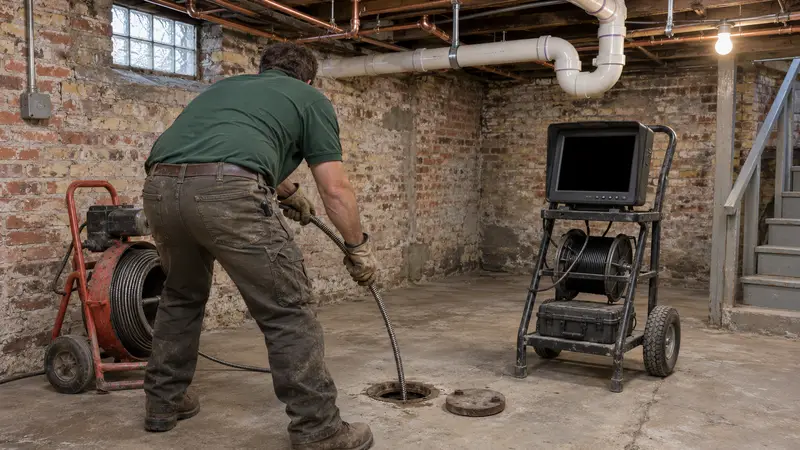
The fix: The line is cleared, a sewer camera check finds the break and the damaged section is repaired.
Where leaks and clogs show up in Greenville homes
Crawl space houses are the norm in older Greenville. Pipes hang under the floor, where a drip can run for weeks before a stain or smell shows up. Bathrooms, kitchens and laundry rooms on outer walls get the next share of calls.
Drains cause the rest. Cast iron stacks scale inside, kitchen lines catch grease, and the main sewer line takes roots from nearby trees. A tub that drains slowly or a toilet that gurgles often means the main line. When a hard freeze hits Greenville, the first split pipe is usually in a garage, crawl space or exterior wall, and the first minutes after a pipe bursts decide how much water gets in.
Cold snaps, spring storms and humid summers
Winter freezes bring a rush of calls. Crawl spaces, garages and outside walls lose heat quickly on still nights. When the thaw comes, water runs inside the wall and the owner finds out.
Spring storms soak the clay and fill older laterals. Summer heat works the water heater hard, especially in garage and attic closets. A rusted base or a wet pan is the first warning that a tank is close to failing. Roots find the joints in old Greenville sewer lines, and the signs of a clogged main sewer line start with slow drains in more than one fixture.
Foothill soil, mill villages and mature trees
Greenville sits on red clay that holds water and moves with the seasons. Old clay and cast iron lines break more easily in that soil. The break often leaves a wet patch in the yard or a long, slow drain.
The mill villages and older neighborhoods have small houses with additions. Plumbing was often extended in stages, so one house may have four kinds of pipe. We trace the oldest runs first, since they are the ones most likely to fail. Homes in nearby Mauldin and Taylors deal with much the same moisture.
Neighborhoods we cover in Greenville
Judson
Former mill village houses from the early 1900s on crawl spaces, with original lines and clay drains now far past their intended life.
- 29611
Sans Souci
Mid-century homes on mature lots, where large trees grow over drains that are decades old.
- 29617
Hampton-Pinckney Historic District
Historic homes from the 1800s and early 1900s with old galvanized and cast iron lines that have been patched over many years.
- 29601
Plumbing services Greenville homes call about
Emergency Plumber
Burst pipes, major leaks, sewage backups and no water, with an answer around the clock.
Emergency Plumber ›Leak Detection and Repair
Slab leaks, wall leaks and pipe leaks found and fixed before they ruin floors and drywall.
Leak Detection and Repair ›Drain Cleaning
Clogged sinks, tubs, toilets and main sewer lines cleared, including roots and sewer camera checks.
Drain Cleaning ›Common problems we get calls about
Frozen or split pipes
Pipes in exterior walls, garages and crawl spaces freeze first, and the leak starts at the thaw.
Roots in the sewer line
Gurgling, slow drains in several fixtures and repeat main line clogs often mean roots in the lateral.
Banging or noisy pipes
Water hammer, loose pipe straps or high pressure rattle walls.
Rusty water and weak pressure from old pipe
Brown water after a repair, or pressure that dropped at every tap, points to aging galvanized lines.
Low water pressure
A failing regulator, a hidden leak or clogged aerators cut flow.
Sewage backing up
Wastewater at a floor drain or tub points to a main line clog.
Get help in three simple steps
- Call and describe the problem
Tell us what is leaking, backing up or not working, and whether water is still running.
- We answer your call
Tell us your address and we confirm that we serve it. We set a time to come to the house.
- Repair and cleanup
We find the cause and fix it. We test the line or fixture before we leave.
Areas we serve in Greenville
Greenville is the center of our Greenville service area. We serve homes in:
- 29601
- 29605
- 29607
- 29609
- 29611
- 29613
- 29614
- 29615
- 29617
Plumbing questions in Greenville
How can I find a hidden leak?
Turn every tap off and watch the water meter. If it still moves, water is escaping somewhere. Warm spots on a slab floor or damp drywall point to where.
Why do my drains keep clogging?
Grease, hair, wipes and tree roots are the common causes. If several drains back up at once, the clog is usually in the main sewer line.
Why is my water pressure low?
Mineral buildup in aerators, a failing pressure regulator or a hidden leak are the usual causes. Low pressure at every fixture points to the main line or regulator.
Who is a plumber near me in Greenville?
We are. We serve Greenville homes. Call (844) 626-0032 and describe the problem.
Plumber in Greenville, SC: Call Now
Tell us what is leaking, backing up or not working. We take it from there.
Call Now (844) 626-0032