Plumber Great Falls, VA
Plumbing repair for Great Falls homes: burst pipes, old galvanized and cast iron lines and sewer lines with roots. Call Now and we get started.
Call Now (844) 626-0032Say what is leaking, backing up or not working.Is your address covered?
Enter a ZIP code or city to see if we serve your area.
Plumbing problems in Great Falls
Great Falls is known for large houses on wooded lots near the Potomac, where the ground is rocky and the trees are tall. Many homes sit far from the street on long drives, and many rely on private septic systems and wells. That setup makes plumbing here a bit different from the rest of Fairfax County.
Long pipe runs, several bathrooms and finished lower levels give leaks plenty of places to hide. In Great Falls, we trace hidden leaks, clear lines from the house to the septic tank and replace worn water heaters and well-side fittings. Tell us what you see and we get to work.
Why plumbing fails in Great Falls homes
Updated November 2026
- Why do drains slow down in Great Falls homes on septic?Wastewater leaves the house through one line to a tank in the yard. Roots from big trees and grease buildup narrow that line over time. The first sign is a slow tub or a gurgle in a far bathroom.
- Why do pipes freeze in large Great Falls homes?Big houses have long runs through outside walls, bonus rooms over garages and cantilevered floors. Cold air gets to those spots, and a rarely used bathroom is a common place for a split. Winter trips away leave the damage running unseen.
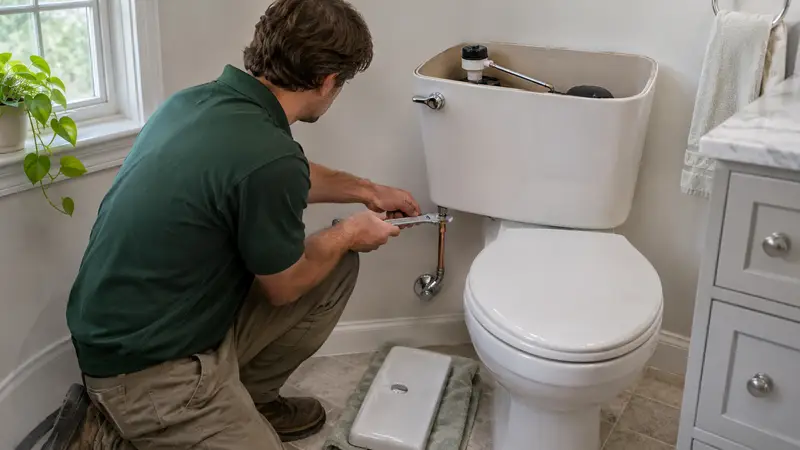
- Why do well systems cause plumbing calls here?A home on a private well has a pump and a pressure tank that work harder than city supply. Pressure swings, sputtering faucets and a pump that cycles often are common signs. Fittings near the tank can wear and drip.
- Why do finished basements leak in Great Falls?Many homes have walkout lower levels with bathrooms, a bar or a laundry room. Sump pumps, drain lines and water heaters share that space. A power loss in a storm can stop a pump and flood the floor.
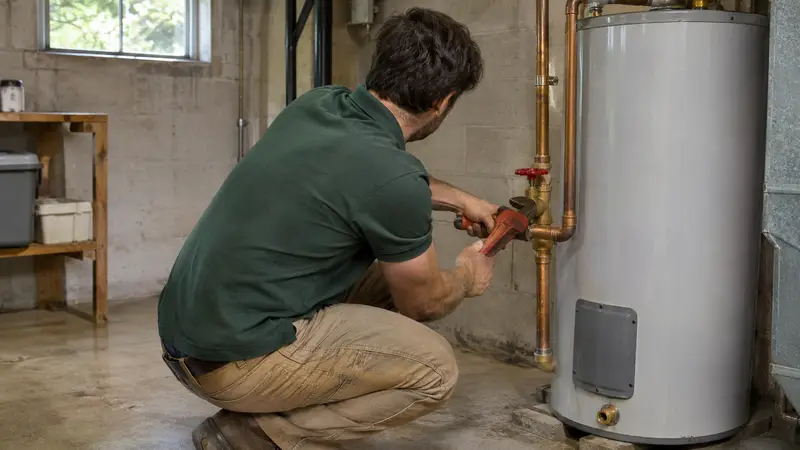
- Why do water heaters work so hard in big homes?Large houses often have more than one tank, or a large tank that feeds distant bathrooms. Long runs mean more cold water to push out before it turns hot. Tanks wear faster and fittings give out early.
How freezing nights reach Great Falls plumbing
Roots from tall hardwoods reach the line from the house to the tank, and grease coats the walls. Drains slow down and fixtures far from the tank back up first.
The fix: The line is cleared, a sewer camera check finds any break or root mass, and the damaged piece is repaired.
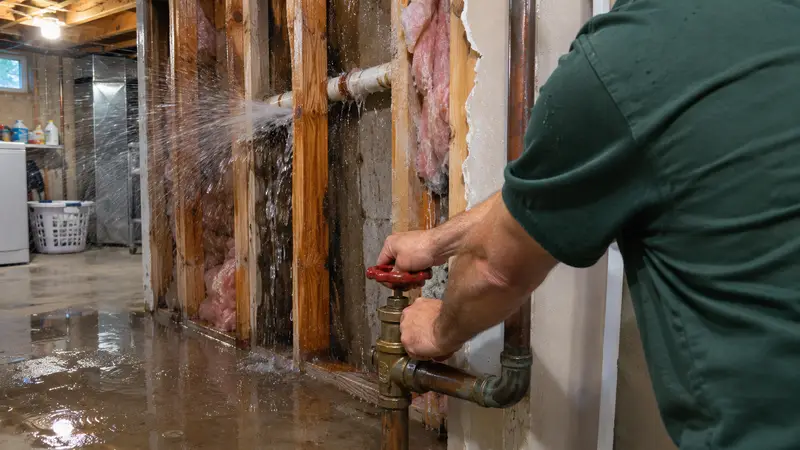
Big homes route pipe through outside walls, over garages and under bay windows. A hard freeze splits the line, and water fills the wall before it shows.
The fix: The water is shut off, the split is repaired, and the run is moved or wrapped to keep it warm.
Wells, sump pumps and lift pumps all need power. When a storm knocks it out, pressure drops and low spots in the lower level take on water.
The fix: Pumps, check valves and pressure tank fittings are repaired or replaced, and the drain lines around them are cleared.
Where plumbing problems show up in Great Falls homes
The calls often start in the lower level of a large house. A walkout basement with a bathroom, a laundry room and a sump pit holds many pipes in a small space. A damp wall or a wet carpet edge points to a leak behind it.
Master baths and upstairs laundry rooms are the other hot spots. Long runs of supply pipe feed them, and a pinhole in one run can soak the room below. On septic homes, a slow tub is the early warning for a line that is closing up. Cold snaps in Great Falls turn small cracks into floods, so knowing what to do when a pipe bursts saves floors and drywall.
Winter freezes, spring rain and summer storms
Freezing nights come with the winter months, and the big, wind-exposed houses on open lots lose heat fast. Bonus rooms over garages and exterior kitchen walls are where pipes split. Owners who travel in winter come home to the damage.
Spring rain and summer thunderstorms are hard on septic lines and sump pits. Heavy rain fills the ground around the tank and pushes water toward the house. Power cuts from storms stop pumps just when they are needed most. Roots find the joints in old Great Falls sewer lines, and the signs of a clogged main sewer line start with slow drains in more than one fixture.
Rocky ground, tall hardwoods and long drives
Great Falls sits on rocky Piedmont ground close to the river gorge. Pipe trenches have to work around stone, so lines sometimes bend and settle in odd ways. Over time those low spots collect solids and clog.
Houses here were built from the 1960s through the present, and many have been rebuilt or expanded. New baths and wings are tied into older lines, so the plumbing carries a mix of ages. We trace each branch and repair what is weak. Homes in nearby Reston and Herndon deal with much the same moisture. The wider Northern Virginia area has the same mix of weather and housing.
Plumbing services Great Falls homes call about
Emergency Plumber
Burst pipes, major leaks, sewage backups and no water, with an answer around the clock.
Emergency Plumber ›Drain Cleaning
Clogged sinks, tubs, toilets and main sewer lines cleared, including roots and sewer camera checks.
Drain Cleaning ›Leak Detection and Repair
Slab leaks, wall leaks and pipe leaks found and fixed before they ruin floors and drywall.
Leak Detection and Repair ›Common problems we get calls about
Basement floor drain backups
Heavy rain or a clogged main sends water up through the lowest drain in the house.
Rusty water and weak pressure from old pipe
Brown water after a repair, or pressure that dropped at every tap, points to aging galvanized lines.
Frozen or split pipes
Pipes in exterior walls, garages and crawl spaces freeze first, and the leak starts at the thaw.
Dripping faucets and fixtures
Worn cartridges and washers waste water around the clock.
No hot water
A leaking tank, a pilot that will not stay lit or a failed element.
Roots in the sewer line
Gurgling, slow drains in several fixtures and repeat main line clogs often mean roots in the lateral.
Get help in three simple steps
- Call and describe the problem
Tell us what is leaking, backing up or not working, and whether water is still running.
- We answer your call
Tell us your address and we confirm that we serve it. We set a time to come to the house.
- Repair and cleanup
We find the cause and fix it. We test the line or fixture before we leave.
Areas we serve in Great Falls
Great Falls is part of our Northern Virginia service area. We serve homes in:
- 22066
Plumbing questions in Great Falls
Why do my drains keep clogging?
Grease, hair, wipes and tree roots are the common causes. If several drains back up at once, the clog is usually in the main sewer line.
How can I find a hidden leak?
Turn every tap off and watch the water meter. If it still moves, water is escaping somewhere. Warm spots on a slab floor or damp drywall point to where.
How do I shut off the water in an emergency?
Turn the main shutoff valve clockwise until it stops. It is usually where the water line enters the house, near the meter, in a basement or in a utility closet.
Who is a plumber near me in Great Falls?
We are. We serve Great Falls homes. Call (844) 626-0032 and describe the problem.
Plumber in Great Falls, VA: Call Now
Tell us what is leaking, backing up or not working. We take it from there.
Call Now (844) 626-0032