Plumber Chicago, IL
Plumbing repair for Chicago homes: burst pipes, old galvanized and cast iron lines and sewer lines with roots. Call Now and we get started.
Call Now (844) 626-0032Say what is leaking, backing up or not working.Is your address covered?
Enter a ZIP code or city to see if we serve your area.
Plumbing problems in Chicago
Chicago was built on a flat lakebed of clay, and most of the city drains through combined sewers that carry rain and household waste together. Block after block is lined with brick bungalows, two-flats, three-flats and greystones from the early 1900s, and most of them have a basement or a garden unit below the street.
Calls come in for sewer backups after storms, leaks that drip from one unit into the next, and frozen pipes on the coldest nights. In Chicago, we clear sewer lines, trace leaks in old stacks, repair worn supply pipe and replace failed water heaters.
Why plumbing fails in Chicago homes
Updated November 2026
- Why do Chicago basements back up in storms?The combined sewers can fill faster than they empty in a hard rain. The water then rises to the lowest drain in the building. That is often a floor drain, a laundry tub or a toilet in a basement or garden unit.
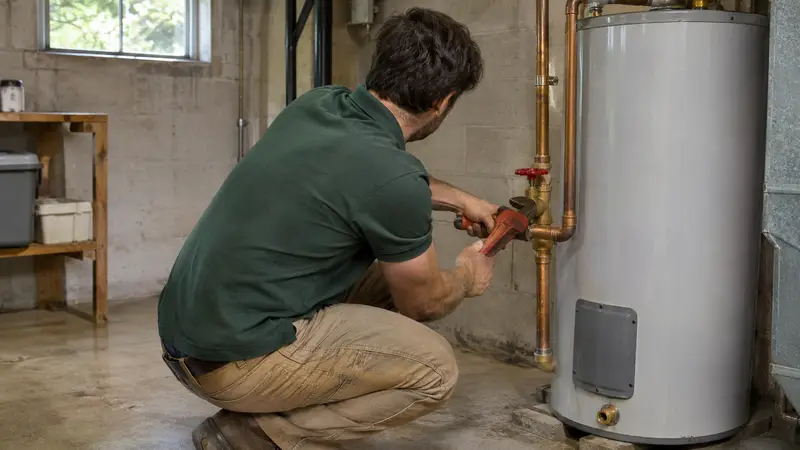
- Why do two-flats and three-flats have so many leaks?Stacked units share cast iron stacks and old supply lines that run through walls and floors. One leak drips into the unit below. Owners usually notice a stain on the ceiling long before the pipe itself shows.
- Do old Chicago homes still have lead service pipe?Many older homes still have a lead service line from the street to the meter. The street side belongs to the city. Inside the house, old pipe can be repaired or replaced, and the owner is told what is found.
- Do pipes freeze in Chicago?Yes. Hard cold off the lake reaches back porches, garages, kitchens on outside walls and unheated basements. Pipes split on the coldest nights, and the water shows up when the thaw starts.
- Why do drains clog so often in older Chicago buildings?Cast iron drains from the early and middle 1900s scale over inside, and clay lines run a long way to the alley or street. Grease, paper and roots catch on the rough walls. A slow tub often turns into a backup.
How freezing nights reach Chicago plumbing
Rain and household waste share one city pipe. When a storm fills it, water pushes back into basements, garden units and low toilets.
The fix: We clear the line, run a sewer camera check, and fit an overhead sewer, a backwater valve or an ejector pit where the building needs one.
Stacks from the early 1900s rust through at the joints and hubs. The owner sees a stain on the ceiling, a damp wall or a smell near a bathroom.
The fix: We trace the leak, cut out the worn section and replace it with new pipe.
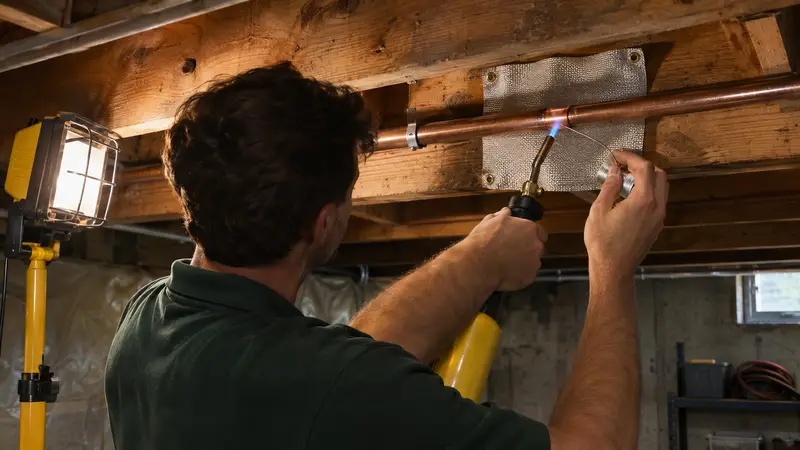
Pipes in back porches, garages and unheated basements freeze on the coldest nights. The split pipe floods the space once it thaws.
The fix: We repair the split and reroute or wrap exposed pipe where we can, so the next cold night does less harm.
Where plumbing trouble shows up in Chicago homes
Basements and garden units take the first hit. A floor drain that bubbles, a laundry tub that fills when the washer drains, or a toilet that gurgles during a storm all point to a sewer that is full. Kitchen lines in two-flats and three-flats clog often, because several units drain into one old pipe.
Upper floors show the quiet signs. A brown stain on the ceiling, a damp wall near a bathroom, or weak water pressure usually means a leaking stack or a rusted steel supply line. In Chicago, we find the leak and repair the failing section. When a hard freeze hits Chicago, the first split pipe is usually in a garage, crawl space or exterior wall, and the first minutes after a pipe bursts decide how much water gets in.
Storms, hard cold and the Chicago seasons
Spring rain and summer storms bring most of the backups. The ground is already wet, the sewers fill, and the first low drain in the building gives way. Fall leaves and grease add to the load on older lines.
Winter is the season of burst pipes. The first deep freeze after a mild spell catches porches, garages and outside kitchen walls. A pipe that split in the cold may not leak until the house warms up. Roots find the joints in old Chicago sewer lines, and the signs of a clogged main sewer line start with slow drains in more than one fixture.
Clay ground, old alleys and mixed-era pipe
The city sits on soft clay that settles slowly, and that movement pulls old pipe joints apart over many decades. Parkway trees send roots toward the leaks, and sewer lines that run to an alley or street carry the strain. Many buildings have pipe from three or four eras in a single wall.
A house from the 1920s may have clay drains, cast iron stacks, steel supply lines and a few later copper repairs. A repair often means tying new pipe into old, so we plan the work before we open a wall. Homes in nearby Berwyn and Oak Park deal with much the same moisture. The wider Chicago Area area has the same mix of weather and housing.
Neighborhoods we cover in Chicago
Bridgeport
Brick workers' cottages and two-flats from the late 1800s and early 1900s often keep old cast iron and clay drains.
- 60608
Beverly
Large houses from the 1920s and 1930s sit under mature trees whose roots reach old sewer lines.
- 60643
Logan Square
Greystones and two-flats from the early 1900s have aging stacks and basement units that back up first.
- 60647
Jefferson Park
Brick bungalows from the 1920s through the 1950s have basement drains that back up in hard rain.
- 60630
Rogers Park
Older brick courtyard buildings and two-flats near the lake have aging stacks and long drain runs.
- 60626
Plumbing services Chicago homes call about
Emergency Plumber
Burst pipes, major leaks, sewage backups and no water, with an answer around the clock.
Emergency Plumber ›Drain Cleaning
Clogged sinks, tubs, toilets and main sewer lines cleared, including roots and sewer camera checks.
Drain Cleaning ›Leak Detection and Repair
Slab leaks, wall leaks and pipe leaks found and fixed before they ruin floors and drywall.
Leak Detection and Repair ›Common problems we get calls about
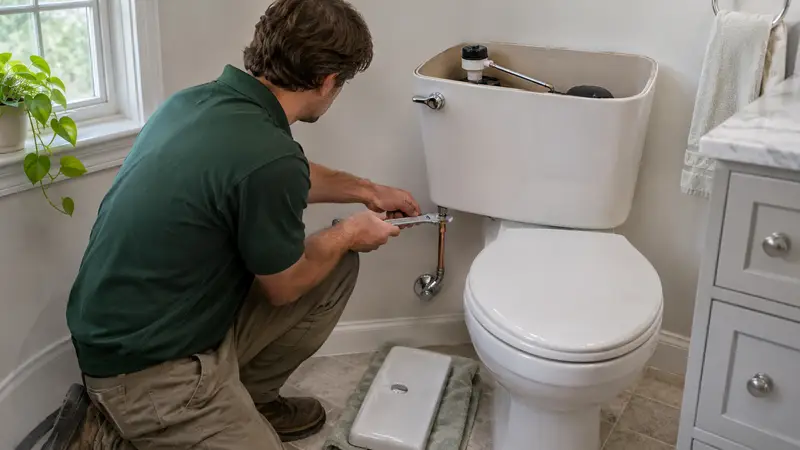
Running or leaking toilets
A bad flapper, fill valve or wax ring wastes water or leaks onto the floor.
Rusty water and weak pressure from old pipe
Brown water after a repair, or pressure that dropped at every tap, points to aging galvanized lines.
Frozen or split pipes
Pipes in exterior walls, garages and crawl spaces freeze first, and the leak starts at the thaw.
Roots in the sewer line
Gurgling, slow drains in several fixtures and repeat main line clogs often mean roots in the lateral.
Dripping faucets and fixtures
Worn cartridges and washers waste water around the clock.
Basement floor drain backups
Heavy rain or a clogged main sends water up through the lowest drain in the house.
Get help in three simple steps
- Call and describe the problem
Tell us what is leaking, backing up or not working, and whether water is still running.
- We answer your call
Tell us your address and we confirm that we serve it. We set a time to come to the house.
- Repair and cleanup
We find the cause and fix it. We test the line or fixture before we leave.
Areas we serve in Chicago
Chicago is part of our Chicago Area service area. We serve homes in:
- 60601
- 60602
- 60603
- 60604
- 60605
- 60606
- 60607
- 60608
- 60609
- 60610
- 60611
- 60612
- 60613
- 60614
- 60615
- 60616
- 60617
- 60618
- 60619
- 60620
- 60621
- 60622
- 60623
- 60624
- 60625
- 60626
- 60628
- 60629
- 60630
- 60631
- 60632
- 60633
- 60634
- 60636
- 60637
- 60638
- 60639
- 60640
- 60641
- 60642
- 60643
- 60644
- 60645
- 60646
- 60647
- 60649
- 60651
- 60652
- 60653
- 60654
- 60655
- 60656
- 60657
- 60659
- 60660
- 60661
Plumbing questions in Chicago
How do I shut off the water in an emergency?
Turn the main shutoff valve clockwise until it stops. It is usually where the water line enters the house, near the meter, in a basement or in a utility closet.
How can I find a hidden leak?
Turn every tap off and watch the water meter. If it still moves, water is escaping somewhere. Warm spots on a slab floor or damp drywall point to where.
Why is my water pressure low?
Mineral buildup in aerators, a failing pressure regulator or a hidden leak are the usual causes. Low pressure at every fixture points to the main line or regulator.
Who is a plumber near me in Chicago?
We are. We serve Chicago homes. Call (844) 626-0032 and describe the problem.
Plumber in Chicago, IL: Call Now
Tell us what is leaking, backing up or not working. We take it from there.
Call Now (844) 626-0032