Plumber Brooklyn, NY
Plumbing repair for Brooklyn homes: burst pipes, old galvanized and cast iron lines and basement drains and sump lines. Call Now and we get started.
Call Now (844) 626-0032Say what is leaking, backing up or not working.Is your address covered?
Enter a ZIP code or city to see if we serve your area.
Plumbing problems in Brooklyn
Brooklyn is a borough of brownstones, rowhouses, two- and three-family houses and pre-war apartment buildings, packed block after block. Most were built in the 1800s and early 1900s, so cast iron stacks, old steel and lead lines are still common. Garden floors and cellars sit below the street.
Calls come for backed up kitchen lines, burst pipes in winter, low pressure, boiler and water heater failures and basement drain backups. In Brooklyn, we trace the cause, fix the line and get your water working. Tell us what is leaking and we start there.
Why plumbing fails in Brooklyn homes
Updated November 2026
- Why do old Brooklyn buildings have rusty water?Many buildings from the 1800s and early 1900s keep galvanized and old steel supply lines. They rust from inside and shed scale. You see orange water, weak flow and leaks at old joints.
- Why do kitchen and bath drains back up in Brooklyn?Several units often share one cast iron stack. Grease, wipes and years of use build up in the same pipe. One clog then shows in more than one apartment.
- Why do basements and garden floors flood in Brooklyn?Many sit below the street. A downpour fills the combined sewers and pushes water back into floor drains. Low fixtures and boilers get hit first.
- Why do pipes freeze in Brooklyn buildings?Lines run in outer walls, back additions and unheated halls. A hard freeze splits them. Water appears in the unit below when the thaw begins.
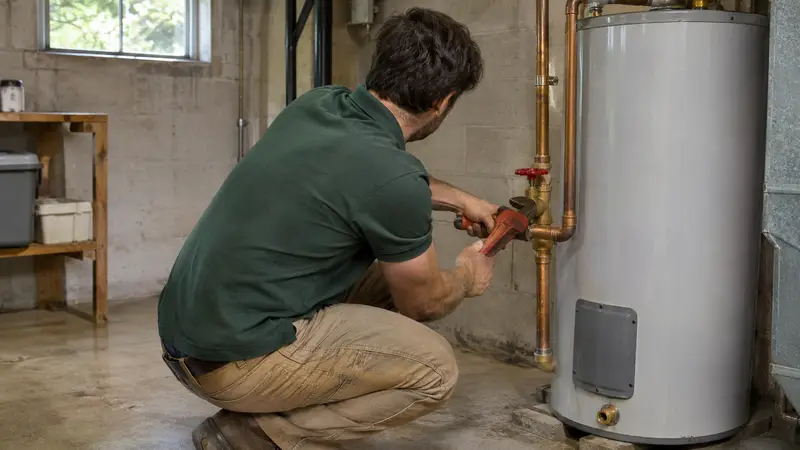
- Why do boilers and water heaters fail in Brooklyn?Old equipment sits in damp cellars and tight closets. Sediment and rust shorten the life of tanks. Failure often comes in the middle of a cold week.
How freezing nights reach Brooklyn plumbing
Old pipe rusts and narrows over a century of use. You see weak flow, brown water, repeat clogs and wet stains on ceilings below.
The fix: Bad runs are cut out and replaced with new copper or PEX, and worn stack sections are renewed.
In a hard rain the street sewer fills and pushes back. The cellar or garden floor drain is the lowest outlet. You see water on the floor and a sewer smell.
The fix: The line is cleared, a sewer camera check finds the damage, and a backwater valve is added where backups repeat.
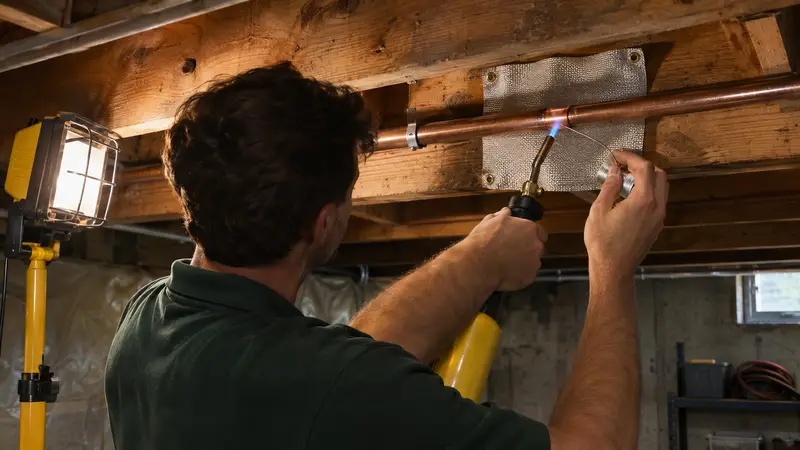
Pipes in outside walls, back additions and cold halls split in a deep freeze. Water drips into the unit below as the thaw arrives.
The fix: The burst is repaired, exposed lines are insulated or moved, and shutoffs are checked.
Where leaks and backups show up in Brooklyn buildings
In older Brooklyn buildings, look at the cellar floor drain, the stack at the base and the line under the kitchen. A gurgle at one fixture when another drains points to a stressed stack. Wet plaster below a bath means an old joint is leaking.
On upper floors, brown water after the building sits means rust in the supply. A weak tap at the top unit means scale has narrowed an old riser. Cold snaps in Brooklyn turn small cracks into floods, so knowing what to do when a pipe bursts saves floors and drywall.
Deep freezes, heat waves and summer downpours
Winter calls peak during hard freezes. Pipes in outer walls and back additions split, and tenants find water in the ceiling. Boilers that fail in the cold bring another round of calls.
Summer brings heat that tires water heaters and storms that overload the combined sewers. We get calls from cellars with water at the floor drain after a downpour. Late summer is also when old tanks give out. When the meter keeps moving in a Brooklyn home with every tap off, a sudden high water bill points to a leak.
Century-old blocks and shared plumbing
Brooklyn was built out in waves, and much of its plumbing is a patchwork of eras. A brownstone from the 1800s may have new copper on top and old cast iron below. Mixed metals and tired joints are common.
In multi-family buildings, one failing stack can touch many homes. We replace the bad section rather than clear it again and again. That ends the repeat calls for everyone on the line. Homes in nearby Hoboken, NJ and Jersey City, NJ deal with much the same moisture. The wider New York City area has the same mix of weather and housing.
Neighborhoods we cover in Brooklyn
Park Slope
Rowhouses and brownstones from the late 1800s and early 1900s, with cast iron stacks and old supply lines inside the walls.
- 11215
Bay Ridge
Older brick houses and apartment buildings, many with cellars, old drain lines and aging boilers and water heaters.
- 11209
Flatbush
Large older frame and brick houses, many with basements, old cast iron drains and roots from mature street trees.
- 11226
Sheepshead Bay
Low-lying blocks near the water, where older homes and cellars are prone to storm backups.
- 11235
Williamsburg
Older rowhouses, converted lofts and multi-family buildings, where shared stacks and old supply lines wear hard.
- 11211
Plumbing services Brooklyn homes call about
Emergency Plumber
Burst pipes, major leaks, sewage backups and no water, with an answer around the clock.
Emergency Plumber ›Leak Detection and Repair
Slab leaks, wall leaks and pipe leaks found and fixed before they ruin floors and drywall.
Leak Detection and Repair ›Drain Cleaning
Clogged sinks, tubs, toilets and main sewer lines cleared, including roots and sewer camera checks.
Drain Cleaning ›Common problems we get calls about
Basement floor drain backups
Heavy rain or a clogged main sends water up through the lowest drain in the house.
Frozen or split pipes
Pipes in exterior walls, garages and crawl spaces freeze first, and the leak starts at the thaw.
Clogged or slow drains
A sink, tub or toilet that drains slowly, gurgles or backs up.
Low water pressure
A failing regulator, a hidden leak or clogged aerators cut flow.
Burst or leaking pipes
Water on the floor or a wet ceiling. Shutting off the main valve limits damage until we arrive.
Rusty water and weak pressure from old pipe
Brown water after a repair, or pressure that dropped at every tap, points to aging galvanized lines.
Get help in three simple steps
- Call and describe the problem
Tell us what is leaking, backing up or not working, and whether water is still running.
- We answer your call
Tell us your address and we confirm that we serve it. We set a time to come to the house.
- Repair and cleanup
We find the cause and fix it. We test the line or fixture before we leave.
Areas we serve in Brooklyn
Brooklyn is part of our New York City service area. We serve homes in:
- 11201
- 11203
- 11204
- 11205
- 11206
- 11207
- 11208
- 11209
- 11210
- 11211
- 11212
- 11213
- 11214
- 11215
- 11216
- 11217
- 11218
- 11219
- 11220
- 11221
- 11222
- 11223
- 11224
- 11225
- 11226
- 11228
- 11229
- 11230
- 11231
- 11232
- 11233
- 11234
- 11235
- 11236
- 11237
- 11238
- 11239
- 11249
Plumbing questions in Brooklyn
Why do my drains keep clogging?
Grease, hair, wipes and tree roots are the common causes. If several drains back up at once, the clog is usually in the main sewer line.
What counts as a plumbing emergency?
A burst pipe, water that will not shut off, sewage backing up, no water at all or a gas smell from a water heater. Shut off the main water valve for leaks and call us right away.
Why is my water heater leaking?
A leak from the tank means the tank failed and needs replacement. A leak at a pipe connection or the relief valve can often be repaired.
Who is a plumber near me in Brooklyn?
We are. We serve Brooklyn homes. Call (844) 626-0032 and describe the problem.
Plumber in Brooklyn, NY: Call Now
Tell us what is leaking, backing up or not working. We take it from there.
Call Now (844) 626-0032