Plumber Allen, TX
Plumbing repair for Allen homes: burst pipes, slab leaks and sewer lines with roots. Call Now and we get started.
Call Now (844) 626-0032Say what is leaking, backing up or not working.Is your address covered?
Enter a ZIP code or city to see if we serve your area.
Plumbing problems in Allen
Allen is a suburb north of Dallas built on heavy black clay prairie soil. The clay swells in wet weather and shrinks in dry spells, and that slow movement bends and cracks pipes under the slab. Almost every home is on a concrete foundation, most were built from the 1980s onward, and the hard water in North Texas leaves scale in every tank and fixture.
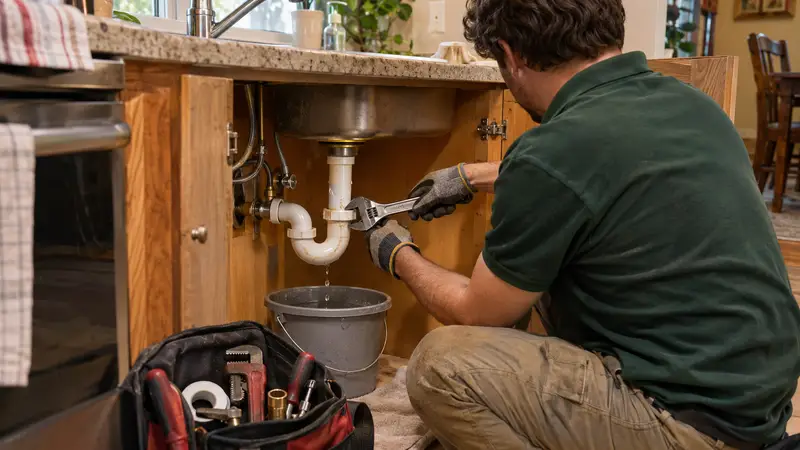
Calls in Allen are slab leaks, water heaters that fail in the garage or attic, sewer lines packed with roots and pipes that split in a rare hard freeze. In Allen, we trace the leak, repair or reroute the line and clear the drain so the house gets back to normal.
Why plumbing fails in Allen homes
Updated November 2026
- Why do slab leaks happen in Allen?Allen homes sit on slabs over clay that swells and shrinks with the weather. The soil pulls on supply and drain lines under the concrete. Over the years a joint or a thin spot gives way, and water leaks under the floor.
- Why do pipes freeze in Allen when winters are mild?North Texas gets hard freezes every few winters, and most homes are not built for them. Pipes in attics, garages and outside walls have little protection. A split line can pour water into a ceiling or a wall.
- Why does hard water shorten water heater life in Allen?North Texas water is known for being hard. Scale builds at the bottom of the tank and coats the heating parts. The heater runs loud and fails earlier, often in a garage or attic.
- Why do sewer lines clog in newer Allen subdivisions?Young trees planted along the streets grow fast, and roots follow moisture to lateral joints. Clay movement also shifts lines and leaves low spots. Waste catches there, and drains slow again and again.
- Why do water lines break after the ground moves?Dry summers crack the clay and open gaps around pipes. When rain returns, the soil swells and pushes on the lines. Yard lines and irrigation feeds are often the first to fail.
How freezing nights reach Allen plumbing
Clay swells in rain and shrinks in drought, pulling on the lines buried in or under the foundation. Owners see a warm spot on the floor, the sound of running water or a high water bill.
The fix: We locate the leak and repair the line, or reroute it through the walls or attic so the slab stays untouched.
Attic lines, garage walls and exterior spigots have little insulation. When a deep freeze arrives, they split, and water floods a ceiling or wall at the thaw.
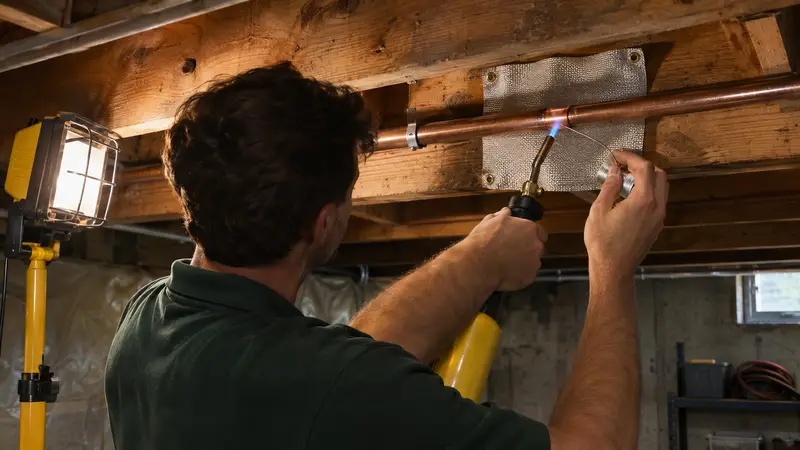
The fix: We shut off the water, replace the split section and wrap or move lines that are exposed.
Minerals coat the tank, heating parts and aerators. Heaters run loud and fail early, and faucets and shower heads lose flow.
The fix: The old heater is drained and replaced, and clogged fixtures and stuck valves are cleaned or swapped out.
Where leaks show up in Allen homes
Slab houses hide most of their plumbing. A leak shows up as a damp patch on tile, a warm floor, a hissing wall or low pressure at one fixture. Water heaters in garages and attics are the other big source, and a failed tank can soak a ceiling.
Kitchens and bathrooms show up too. Washer hoses split, toilet supplies weep and old shutoff valves stick from scale. Yard lines and sprinkler feeds also break when the clay moves. Water running through a slab shows up first as a warm floor patch or a meter that keeps moving, and the signs of a slab leak are easy to miss in Allen homes.
Dry summers, spring storms and winter freezes
Texas summers are long and hot, and the clay dries and cracks. Heaters in attics work in extreme heat, and supply lines in the attic get brittle with age. Dry ground also opens gaps around buried pipes.
Spring storms bring sudden rain that swells the clay and loads the sewers. Winter freezes are rare but sharp, and they catch homes that never needed protection before. Calls spike the morning after a deep freeze and again at the thaw. Roots find the joints in old Allen sewer lines, and the signs of a clogged main sewer line start with slow drains in more than one fixture.
Suburban growth, clay soil and young trees
Allen grew fast, with most of its homes built from the 1980s through the 2000s. Many have copper lines under the slab, and some earlier homes may have polybutylene that is now past its prime. Newer builds use PEX, which holds up better when fittings are done right.
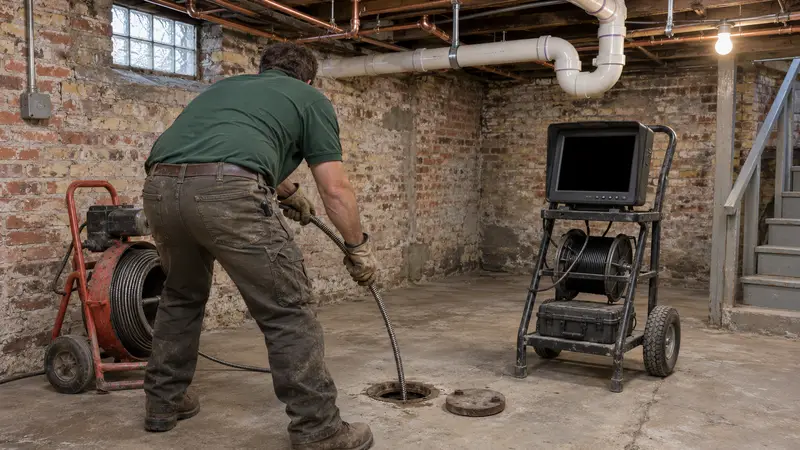
Black clay moves more than most soils, and it pulls on sewer and supply lines alike. Young trees along new streets send roots toward every damp joint. A drain that slows each year is often a root problem, and a camera shows it. Homes in nearby Plano and McKinney deal with much the same moisture. The wider Dallas-Fort Worth area has the same mix of weather and housing.
Neighborhoods we cover in Allen
Twin Creeks
Large planned community of homes from the 1990s and 2000s on clay slabs with garage water heaters.
- 75013
Ridgeview
Established slab homes from the 1990s where buried lines have been moving with the clay for decades.
- 75002
Plumbing services Allen homes call about
Emergency Plumber
Burst pipes, major leaks, sewage backups and no water, with an answer around the clock.
Emergency Plumber ›Leak Detection and Repair
Slab leaks, wall leaks and pipe leaks found and fixed before they ruin floors and drywall.
Leak Detection and Repair ›Water Heater Repair and Replacement
Tank and tankless water heaters that leak, run cold or stopped working.
Water Heater Repair and Replacement ›Common problems we get calls about
Roots in the sewer line
Gurgling, slow drains in several fixtures and repeat main line clogs often mean roots in the lateral.
Frozen or split pipes
Pipes in exterior walls, garages and crawl spaces freeze first, and the leak starts at the thaw.
Slab leaks
Warm spots on the floor, a running meter with every tap off or damp carpet point to a leak under the slab.
Scale on faucets and a noisy water heater
White crust on fixtures and a popping tank are signs of mineral buildup.
Banging or noisy pipes
Water hammer, loose pipe straps or high pressure rattle walls.
Dripping faucets and fixtures
Worn cartridges and washers waste water around the clock.
Get help in three simple steps
- Call and describe the problem
Tell us what is leaking, backing up or not working, and whether water is still running.
- We answer your call
Tell us your address and we confirm that we serve it. We set a time to come to the house.
- Repair and cleanup
We find the cause and fix it. We test the line or fixture before we leave.
Areas we serve in Allen
Allen is part of our Dallas-Fort Worth service area. We serve homes in:
- 75002
- 75013
Plumbing questions in Allen
Why is my water heater leaking?
A leak from the tank means the tank failed and needs replacement. A leak at a pipe connection or the relief valve can often be repaired.
How can I find a hidden leak?
Turn every tap off and watch the water meter. If it still moves, water is escaping somewhere. Warm spots on a slab floor or damp drywall point to where.
What counts as a plumbing emergency?
A burst pipe, water that will not shut off, sewage backing up, no water at all or a gas smell from a water heater. Shut off the main water valve for leaks and call us right away.
Who is a plumber near me in Allen?
We are. We serve Allen homes. Call (844) 626-0032 and describe the problem.
Plumber in Allen, TX: Call Now
Tell us what is leaking, backing up or not working. We take it from there.
Call Now (844) 626-0032